| reviewed by Charles T. Markee | [more] [back] |
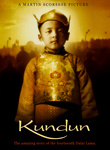
This screenplay dramatizes events in the life of the 14th Dalai Lama from 1937 at age 2 to his exile from Tibet, circa 1959. His birth name was Lhama Dhondrub, however he was assigned a different longer name at age five when he was enthroned. He is typically referred to in the film as 'his holiness' or simply Kundun, which means The Presence.
This 1997 Martin Scorsese work is different from most of his films but similar to The Last Temptation of Christ (1988), in that it explores an aspect of religion, even though strict Buddhists claim that following their Dharma is not a religion. Furthermore, although not a documentary, the film has recreated for posterity wonderful images of the ceremonies, customs, dances and costumes prevalent during the height of the Tibetan Buddhist culture. The screenplay also carries with it the essence of the quiet, non-violent discipline that exemplifies the teachings of the Dalai Lama and the practice of Buddhism.
The beginning half of the film deals with the growth of Kundun from a child into a spiritual man. The latter half depicts the violent invasion of Tibet, its acquisition by communist China and the impact on the Dalai Lama and his people. However this is a movie drama and it is not necessarily a history lesson, a political lesson or a lesson in Buddhism. So it represents an interesting non-didactic exposure to all three of those areas. And since Sino-communist political pressure is today, still eagerly suppressing Tibetan culture, the film provides us a dramatized archive of a disappearing legacy. I noted that Tibet was not available for the project, so it was filmed in Morocco.
If there is a lesson here, it's that isolation and being stuck in the political and social status quo of the past, doesn't work. That is not a criticism of Buddhism or non-violence but a comment on an error in managing the affairs of a sovereign nation.
I found the process for selecting a Dalai Lama particularly interesting because it depends upon a belief in reincarnation. If we suspend that belief, then selection becomes a random process and some very young person is venerated and enthroned as the Dalai Lama, arbitrarily. Events in the screenplay avoid this conundrum by substantiating the reincarnation. But the question remains open for me and I suspect there is more careful investigation in the selection process than was depicted in this film.
The cinematography is excellent and there are interesting camera perspectives that enhance the value of the storyline. Also Philip Glass composed the original music for the film and native instruments were used that made heavy sounds, strange to western ears, but no doubt, authentic.
Reviewed June 7, 2005 Copyright 2005 Charles T. Markee
MPAA: Rated PG-13 for violent images.
| Copyright 2005 Charles T. Markee | [more] [back] |