| reviewed by Charles Markee | [more] [back] |
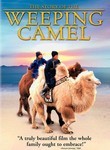
The Story of the Weeping Camel (subtitles)
There is much we don't know about our world and how it works. This story, set in the South Mongolian Gobi desert is a reminder. It is yet another introduction to a remote part of our world with its unique culture and the special talents of its people. We join a Mongolian family and experience their differences as well as their similarities to us in our Western world.
Four generations of this family, wealthy with the animals of their society, live in one large elaborate circular tent. The story is ostensibly about a camel, however it is really about a successful way of life, which includes a symbiotic relationship between the animal herd and the herders. It demonstrates a special communication between man and animal implemented in what they call a 'hoos ritual', which includes throat singing accompanied by a viol like instrument with horsehair strings that is played with a bow.
Throat singing is practiced in Central Asia and has only recently become known in the Western world to some extent through the efforts of the renowned physicist, Richard Feynman. Essentially it is a technique that uses the shape of the human airways to produce polyphonic sounds called overtones. Three forms have developed, chomei or khoomei, sygyt and kargyraa. You can read more about it at http://www.cc.jyu.fi/~sjansson/throat.htm or listen to it at http://www.tarbagan.com/shoncha.htm.
Certainly, this narrative documentary film has been carefully set up and choreographed, but regardless, it's a delightful story with a nice introduction to its characters and a problem that builds to a small, albeit important, crisis that is ultimately resolved. The family is all people playing themselves. Children cry, play games and are bribed with sweets. An old couple plays cards. Boys seek adventure, lust after TV and video games, ride camels and buy themselves ice cream. These things are common around the world.
However, in our Western society, families live separated lives in separate homes, each generation apart and siblings apart. We have lost the benefit of cross generation care taking, education and storytelling that we see portrayed in this film.
We are also isolated from the whim of nature, its storms, its variable temperature and its animals we depend upon for food. We are isolated from animals as a means of transportation. This isn't bad, but it does allow us to be insensitive to our planet in a way that this Mongolian family cannot be and successfully survive.
Reviewed April 23, 2005
MPAA: Rated PG for some mild thematic content.
| Copyright 2005 Charles Markee | [more] [back] |