 Rabbit-Proof Fence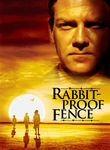
| reviewed by Chuck Markee |
[more] [back] |
by Chuck Markee
| reviewed by Chuck Markee | [more] [back] |
|
Rabbit-Proof Fence Out of the mouths of babes. This is a special film based on an incredible true story and Im somewhat at a loss as to how I should discuss it. One thing is certain, and that is, you should see it. Early in the 20th century, a law called the Aborigines Act was passed in Australia giving power to an administrator called the chief protector to remove any half-caste child from their family. These children were taken to a central location and trained to be useful. This practice was continued until 1970. The result was called The Lost Generation. In 1931, Molly, her cousin Gracie and her little sister Daisy were taken from their mothers and placed in a training center 1500 miles away. Much later, Mollys daughter, Doris Pilkington Garimara, documented how they got away and traveled home in her book. Their odyssey, which is based on that book, is the substance of this film. Phillip Noyce directed the film. He began his directing career in both film and TV in Australia. His American film successes include two Tom Clancy thrillers, Patriot Games (1992) and Clear and Present Danger (1994). Kenneth Branagh plays Mr. A.O. Neville, the chief protector. The children quickly notice that his name rhymes with devil. The real life Neville held the position for 25 years and retired in 1940. Branagh is well known for his roles in many films, the most recent being Professor Lockhart in Harry Potter and the Chamber of Secrets (2002). Branagh was born in Ireland and began his American career in the TV series, Maybury in 1981. His prior work was Shakespearean. David Gulpilil plays Moodoo the tracker, sent out on horseback to find escaped children. I saw him in another truly amazing and powerful Australian film as Black Boy in Walkabout (1971). However these adult actors pale in comparison to the real stars of this film, the three children who play Molly, Daisy and Gracie. It is well worth watching the special features section of the DVD, which covers the selection of the children and their training. After seeing this, I credit Phillip Noyce with much of the artistic success that these three children achieved in portraying their characters. It is quite timely to watch a story about righteous imposition of culture upon others. That particular arrogance seems to live on in spite of stories like this. Reviewed April 26, 2003 |
| Copyright 2005 Chuck Markee | [more] [back] |