
|
Barbara Gates Author of Already Home Running, Stopping, and Looking
Environment affects cancer. Armed with curiosity and a penchant for research, Gates explored her environment and shared her discoveries and reflections in Already Home. There is so much to respect and admire about her memoir. Gates combines complex, global thought with specific people, places, and experiences to create a tale that explores the concept of home in a whole new way. Whether I am in my own neighborhood, helping a friend move out of an old apartment, or exploring new roads and towns, I wonder now about the history of the buildings and the land they are on. Who was here before us, what did they leave behind, and how does it affect our lives today? Read Gates's thoughts about life, meditation, discovery, writing and more in the interview below. LG: Tell us about yourself. Where did you get your training as a writer? What did you write before Already Home? 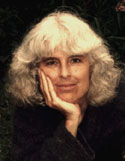 BG: My ear was trained by listening to poetry and fiction read aloud by book-loving parents and grandparents. At the New Lincoln School in New York City and Bennington College, I was inspired by great literature, including Conrad's Heart of Darkness, Faulkner's The Bear, and Woolf's To the Lighthouse. I edited the school newspapers and literary magazines. When I taught high school, I wrote three books of women's studies curriculum. During the past twenty years of co-editing the Buddhist journal Inquiring Mind, I've written essays based in my life. A number of these were anthologized. BG: My ear was trained by listening to poetry and fiction read aloud by book-loving parents and grandparents. At the New Lincoln School in New York City and Bennington College, I was inspired by great literature, including Conrad's Heart of Darkness, Faulkner's The Bear, and Woolf's To the Lighthouse. I edited the school newspapers and literary magazines. When I taught high school, I wrote three books of women's studies curriculum. During the past twenty years of co-editing the Buddhist journal Inquiring Mind, I've written essays based in my life. A number of these were anthologized. LG: When did you realize you had a unique perspective on the concept of home? Do you think you would have made this discovery if you had not been diagnosed with cancer? BG: When I began writing ALREADY HOME, I hadn't yet conceptualized the theme of home. With the diagnosis of cancer, I grappled with the terror of dying young, of leaving behind a motherless five-year-old. This led me to recognize how out of synch I felt with my self and world. I sought connection with the streets of my neighborhood, with human neighbors, other animals, growing things. I broadened my attention beyond woe is me to the healing of the terrain and I broadened my sense of mortality to include the vast impermanence of evolving life. Gradually, I recognized my own yearning for belonging; I saw that I was writing about home. LG: Although Already Home is well organized, I suspect the chapters were not written in order. What did you write first? Did you publish any parts as short pieces before the book was finished? BG: Some chapters were originally written as essays for the Inquiring Mind. I wrote a version of On the Run before I was diagnosed with cancer. When I realized I was writing a book, I wrote an essay, Skunk Practice: Dog Walking through Deep Time. To write it, I did research on the history of the terrain, including the evolving geology, which I made use of in the book. LG: You talk about "skunk practice," which I perceived as a kind of risk-taking, at many points in the book. Can you explain "skunk practice" and tell how it applies to writing as well as living? BG: The term skunk practice came out of an adventure I had with my just-skunked-dog, Cleo, in the back of a pick-up truck swerving on a dark winding road. Responding to Cleo's terror as she careened back and forth, I found myself embracing her, anchoring the two of us amid tumbling shovels and ropes. In that hug, skunk stink alchemized into gamy life stink. This became a metaphor for me of a way of fully living life, of embracing what seemed unembraceable, including mortality, heartache and conflict. Skunk practice has been, indeed, the practice of writing the book. I opened my attention to mortality, to scary things. I told stories which were difficult to tell, asked myself hard questions, entered dark places in the street and in the mind, and in the process, skunk stink became gamy life stink, including all of its joys. LG: Your stories are incredibly honest and gutsy. You dig for the truth. How is telling the story of value to you? What impact do you hope your story will have on readers? BG: Writing is a generative process. Usually I begin with some resonant image, but I don't know where I am going. Take my relationship with the homeless woman Dee who used to sleep in our family car. It wasn't until I wrote a number of stories about Dee that I saw her pain and violence in myself and I saw my own feelings of homelessness. Through that writing, something began to heal for me, and I recognized a common human yearning to be embraced in safety and forgiveness. So this writing offered me insight into myself, into Dee, into all who are subject to the uncertainties of life. I am hoping that my explorations will offer readers the occasion for similar insight and healing. LG: What part of your research intrigued you the most? Were there aspects you wanted to learn more about? BG: I was most fascinated by my research into the ancient Ohlone Indian shellmound. The shellmound became an emblem for me of a way of life where people truly lived in place, on top of what we call our garbage dump and cemetery, where their residence was literally built on who and what had given them life. By contrast, in our contemporary home places, we lose touch with the cycles that sustain us. I've begun to do oral histories of families who came to my neighborhood from the Mexican village, Chavinda. I'd like to do histories with others, including the Middle Eastern and Indian shopkeepers, and members of various churches such as the Coptic Church of the Ethiopians. Mostly, I want to learn more about the pollution of the Bay, the groundwater and air, the health of the broad terrain. LG: Describe your writing process. BG: Since my early twenties I have kept voluminous journals where I've recorded longings, angers, dreams and grappled with dilemmas. Unexpected images, memories and insights have emerged. Such ideas and images often arise also during meditation or during the exhilaration of a run or walk. So I scribble them into a little notebook I carry in my back pocket. When writing the book, I copied those scribblings into my journal. Then I read through the journal and circled favorite passages. I reworked these in the computer. I rewrote everything many times. It took me seven years. Early on, I came up with the basic structure: Running, Stopping and Looking, inspired by the teachings of Vietnamese Zen master Thich Nhat Hanh at a 1992 retreat I'd attended with my family. In a late draft of the book, I realized that my focus moved from the personal to the impersonal, from the dramas of the self to the wide terrain of the shellmound. I liked that. I found wonderful editors among writers I met through Inquiring Mind; they worked with me on remaining true to my own voice and cutting extraneous verbiage. LG: Good process. I like that your thoughts expanded outward instead of narrowing in from a broad pictures. How did you find your agent and how did your agent find the publisher? BG: My agent came to me through a dear friend, the writer Ronna Kabatznick. On the prompting of my agent, I wrote a book proposal which the agency sent to publishing houses. LG: What are you working on now in addition to editing Inquiring Mind? BG: I'm beginning to write an essay for Inquiring Mind on transformation. I am juxtaposing research into the evolution of the local landfill at the Berkeley Marina with explorations of the transformation of the mind through meditation practice. This is always what fascinates me: juxtaposing seemingly disparate domains of experience and seeing where they resonate. I'm looking at the transformation of garbage, what is often cast out, and possibly toxic, into potentially enriched life or consciousness. This may be the beginning of another book. LG: Where can people find copies of Already Home? BG: Buy Already Home in your local bookstore, order it on Amazon.com or with Shambhala Publications at: http://www.shambhala.com/html/catalog/items/isbn/1-57062-490-9.cfm/ LG: Already Home does much more than tell a story. It uses personal stories as well as analysis to examine a different thought process. Visit www.barbaragates.com for more information about the book and the author. Then read Barbara Gates' Already Home and get ready to look at your life and surroundings in a new way. |
B. Lynn Goodwin is the editor of WriterAdvice, http://www.writeradvice.com and contributes author interviews and book reviews to it. She writes book reviews for the Small Press Review and web site reviews for the California Writers Club, has been published in the Oakland Tribune and the Contra Costa Times, and has a piece called Needed in the Winter issue of Flashquake. |
