|
Agent, Sally van Haitsma
Interviewed by Carol Wood
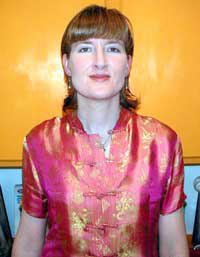
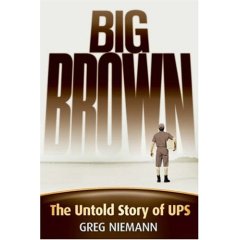
You never know when and where you might meet an agent. I met Sally in the hallway outside the dinning room at the East of Eden Conference. She was really excited about her new client, Greg Niemann. He has written a book called BIG BROWN, the Untold Story of UPS. And from some of what she told me, I immediately wanted to buy that book. It sounds so ... juicy. And it's nonfiction!
Sally was so sweet, so personable, so articulate and so... tall. I just felt very much like I wish I had a book to give her right then and there. I'm sure she would take good care of me. She sort of towers over you in enthusiasm and skill!
I think it's important, and it might be the most important thing that you find out, to know WHAT AN AGENT WANTS before you send them something. Sending in the wrong info or too much or not in the genres they accept, could ruin your chances and waste your time. That's why I was very thrilled when Sally responded to my request for an interview. Hope the text below informs you a little more about the submission process.
Q. What types of work do you represent? What genres?
A. Three agents service the clients of the Castiglia Literary Agency: Julie Castiglia, Winifred Golden and Sally van Haitsma. Ms. Golden will look at Science Fiction, Ethnic, commercial and thriller novels, plus narrative non-fiction and some health books. Sally van Haitsma is actively looking for good proposals (by way of query letters) and her wish list covers literary and women’s fiction, Current Affairs, narrative non-fiction, design, business, and Pop Culture.
Q. What way do you like to receive work? Do you want to see email queries only or mail in queries or do you like the first few pages?
A. I prefer queries by regular mail, and if it's fiction, a sample chapter or two is helpful; if non-fiction I like to review a proposal.
Q. What kind of writing impresses you the most? Is there something particular that makes you take a second look or not leave the page?
A. I like writing that establishes a clear voice and a command of language.
Q. How did you establish your first publishing contacts? Is there any particular publishing firms that you love to work with?
A. Many of my initial publishing contacts were through personal introductions by Julie Castiglia, who opened the agency in 1993. I also attend numerous conferences each year where I meet acquisition editors. I attend the annual National Book Expo which is another opportunity to meet editors. Also, editors frequently query our office to tell us about the types of projects they are looking for, especially if a publisher is introducing a new imprint or has new editors on board. I like working with all the publishers that acquire my clients' books!
Q. What constitutes a good query letter to you? Is more than a page too long?
A. A one page query is the gold standard. It conveys how well the author can organize their thoughts and convey the essence of their project. It should be presented in a professional business letter format, proofed for clarity, grammar and spelling.
Q. Is their any particular format you like people to follow when they write a query to you? Do you have specific questions that you like answered up front?
A. A query should identify up front what type of project is being presented, such as a commercial or literary novel, whether it be a mystery, thriller or women's fiction; and if it's non-fiction, whether it's a memoir or a biography or a self-help/education/scientific/spiritual project, or whatever the case may be. The next paragraph can provide a bit more detail-- a brief synopsis capturing the overall theme(s) of the project. The last paragraph should summarize the author's writing credentials.
Q. Have you ever helped a writer with editing or said you would take them on if they found an editor? Or recommended they speak to an editor and then contact you again?
A. Yes, I've helped many clients edit their work, especially if they are preparing a non-fiction proposal that needs some polishing. However, I wouldn't do such editing unless I've either already decided to represent them, or feel a high probability of offering them representation if they are able to gather the missing elements to their project. With respect to fiction, if I really like the overall work and can envision it as something marketable to the larger publishers with whom our agency work, I'll help the author with some light editing in terms of spelling, word choice, continuity and minor plot points. However, if it needs some significant structural changes (like cutting it down from 150,000 words to something more manageable, like 90,000 words) I'll recommend they work with a freelance editor and take the time to do the additional draft(s).
Q. We've heard that every publisher has young college students reviewing materials first. Does the age of the writer influence your choices?
A. In some cases the age of the writer should have some correspondence to their work. I would be leery of an 18-year-old writer tackling a serious biography on George Washington or writing about raising kids or portraying a middle-age romance. Conversely, I'd take pause if an 80-year-old was writing Chic-lit.
Q. What do you know you can sell right now? Is there anything that you've been asked for?
A. An author's platform, whether they are writing fiction or non-fiction, is the best indicator of whether a book can be easily sold. No matter what the topic or genre, if the author has written for a major publication like the NY Times, WSJournal, or New Yorker, publishers take note. Without such a platform, an author really has to have made a splash by receiving prestigious literary awards or being touted by a famous writer, or having received national attention for their work in a given professional career (if they are writing non-fiction). On the other hand, if the author has written a uniquely compelling story with a fresh, original voice, that can trump all of the above. Sophisticated women's fiction and chic-lit is still going strong, as are books with a paranormal theme. Editors are always looking for books in the arena of health, nutrition, fitness, self-improvement, lifestyle, and relationships, but again, the author has to have a fresh approach and a credible and significant national platform. This may all sound daunting, but aspiring writers have to realize that the larger publishers get to cherry pick the best of the best, and therefore they have the luxury of being quite selective. There are, however, many different roads an author can pursue to get their book published. It just depends on their goals, and how much time and effort they are willing to invest.
Q. What do you hope for when you find a writer that you love?
A. I hope that the writer is able to emotionally handle the challenges of getting their book published. They need to be circumspect regarding the process, which can involve many No's before they get a Yes, and even when an agent or editor loves their work, they may be asked to make significant changes. They have to be flexible and open to suggestions, and yet stay true to their creative vision.
Q. How tough is it looking at the contract? What are the obvious pitfalls that a writer might not know about?
A. Most contracts include language/provisions that are standard for the publishing industry, with some variation. Some of these provisions are negotiable, and some are not. Experienced agents will make sure that as many of these negotiable provisions as possible favor their client. However, there are just some things which the publisher always has finally say about (unless you are a Stephen King) such as the title of your book and the cover artwork. The publisher may consult with you on these matters and it's in their best interest for you to be happy, but they are the ultimate "decider."
Q. What's a typical first meeting like between you and the writer you like? Is there any costs outside of your fee once the manuscript is sold?
A. Since our agency is in Del Mar (located near La Jolla), if an author lives in the Southern California region I will certainly plan on meeting them in person. I like to walk a new client through the process of working with me as an agent, and the steps we will be taking to secure a publisher. I also like to get a sense of their hopes and dreams as a writer, since I see this as a long-term relationship. If my client lives out of California, then I establish this relationship over the phone, and through ongoing e-mails. Whenever an opportunity arises that I may be traveling in their neck of the woods or vice versa, I make arrangements to meet them.
Once a client's project is sold, the only costs that might be incurred would be postage for mailing contracts and checks, and down the road, postage for sending out review copies of their book to people I know in the media. Any unusual or unexpected costs would be approved beforehand by my client.
Q. What kind of percentage can a writer expect from a large publisher? And what can they expect in way of publicity?
A. The truth of the matter is, most first-time authors should not expect large advances, despite what they read in the paper. Million dollar advances are the exception, not the rule. We have a NYTimes bestseller, From Baghdad with Love, that got a very modest advance, but the authors will be well compensated by the royalties they are earning from the 150,000 plus book sales so far (and foreign rights sales). A five figure advance is very good these days. Obviously, agents do their best to get as much as they can for their clients, and if there is an auction and a lot of buzz for a particular project they can get the big bucks, but most advances are fairly modest. In the big picture, if the book sells well, it doesn't matter since they'll earn out their advance right away and immediately be earning royalties. Publishers usually won't throw a lot of money into publicity unless there's already a lot of buzz about the book. The author, therefore, has the burden of really doing whatever they can to get the word out before their book even hits the bookstores. That's why networking is so crucial today, and why the larger publishers are looking for authors, be it fiction or non-fiction, that are building a national platform for themselves.
Q. Is this the same for the smaller publisher? What are the differences between big and small as to benefits and disappointments?
A. For obvious reasons, smaller publishers can't afford the type of advances that the larger publishers can offer. However, the trade-off is that they can offer more individualized attention and editorial support, and they may be willing to nurture talent for the long haul. They may publish only 6-8 titles a year versus the hundreds a large house produces each year. Large publishers, because they are publicly traded corporations, are more focused on the bottom line and therefore looking for instant bestsellers. If your book hits it big, then a large publishing house is the place to be. They do have more clout when it comes to marketing/promotion. Conversely, they are not willing to take as much risk on an unknown than an Indy publisher will. You will notice more and more Indy presses getting their novels reviewed in the NYTimes.
Q. What's your biggest sale to date? Have you ever launched a book auction? What are you proudest of right now?
A. My biggest sale to date is my Big Brown book about the history of UPS. Even though it won't be released until February, it's already generating significant pre-sales on Amazon, and the publisher devoted a full page in their current Winter catalogue. I'm cautiously optimistic that this will be a NYTimes bestseller. Julie Castiglia has launched a number of auctions, but I have not yet personally. I am proud of all my books, but I'd like to showcase some recent releases, one is an inspirational book, Illuminations: Expressions of the Personal Spiritual Experience, edited by Mark Tompkins and Jennifer McMahon (Celestial Arts/Ten Speed Press) See: www.illuminationsbook.com/ And the other is being released the end of November: America and Europe after 9/11 and Iraq: The Great Divide by Sarwar Kashmeri (Praeger Security International) which offers solutions for our situation in Iraq and includes commentary by statesmen such as President Bush, Sr., James Baker, Chuck Hagel, Wesley Clark, etc. See: www.kashmeri.com/
|

 If you want to read more about Sally or the Castiglia Agency, go to http://www.publishersmarketplace.com/members/CastigliaAgency/